The body's own cannabinoid system
The ECS and the entourage effect
Components of the endocannabinoid system have been demonstrated in various animal species, including mammals and birds. This makes possible interactions biologically conceivable, but does not prove that the entourage effect has been demonstrated in every species.
The endocannabinoid system
A network throughout the body
The endocannabinoid system, usually abbreviated to ECS, consists of the body's own signaling substances, receptors and enzymes.
CB1 receptors are common in the brain and central nervous system. CB2 receptors are mainly associated with the immune system and various peripheral tissues. The distribution is not black and white: both receptor types occur in several places in the body.
The ECS helps regulate processes including pain processing, appetite, movement and immune responses. It is evolutionarily conserved in mammals, but receptor distribution and substance metabolism differ between species. A shared system therefore does not mean an identical response to CBD.
CBD does not simply act like a key that turns on one cannabinoid receptor. It can influence the broader system through various pathways and receptors.
How the ECS works: three components
- 01
Signals made by the body
Anandamide (AEA) and 2-arachidonoylglycerol (2-AG) are important endocannabinoids. The body produces these signalling molecules itself, often on demand.
- 02
Receptors receive
CB1 and CB2 relay signals to cells. CB1 is prominent in the nervous system; CB2 is mainly associated with immune functions. Both also occur elsewhere.
- 03
Enzymes regulate
Enzymes produce and break down the signals. FAAH helps degrade AEA; MAGL is important for breaking down 2-AG. This allows signalling to be regulated.
Unique explanation illustrations
CB1 and CB2 in dogs
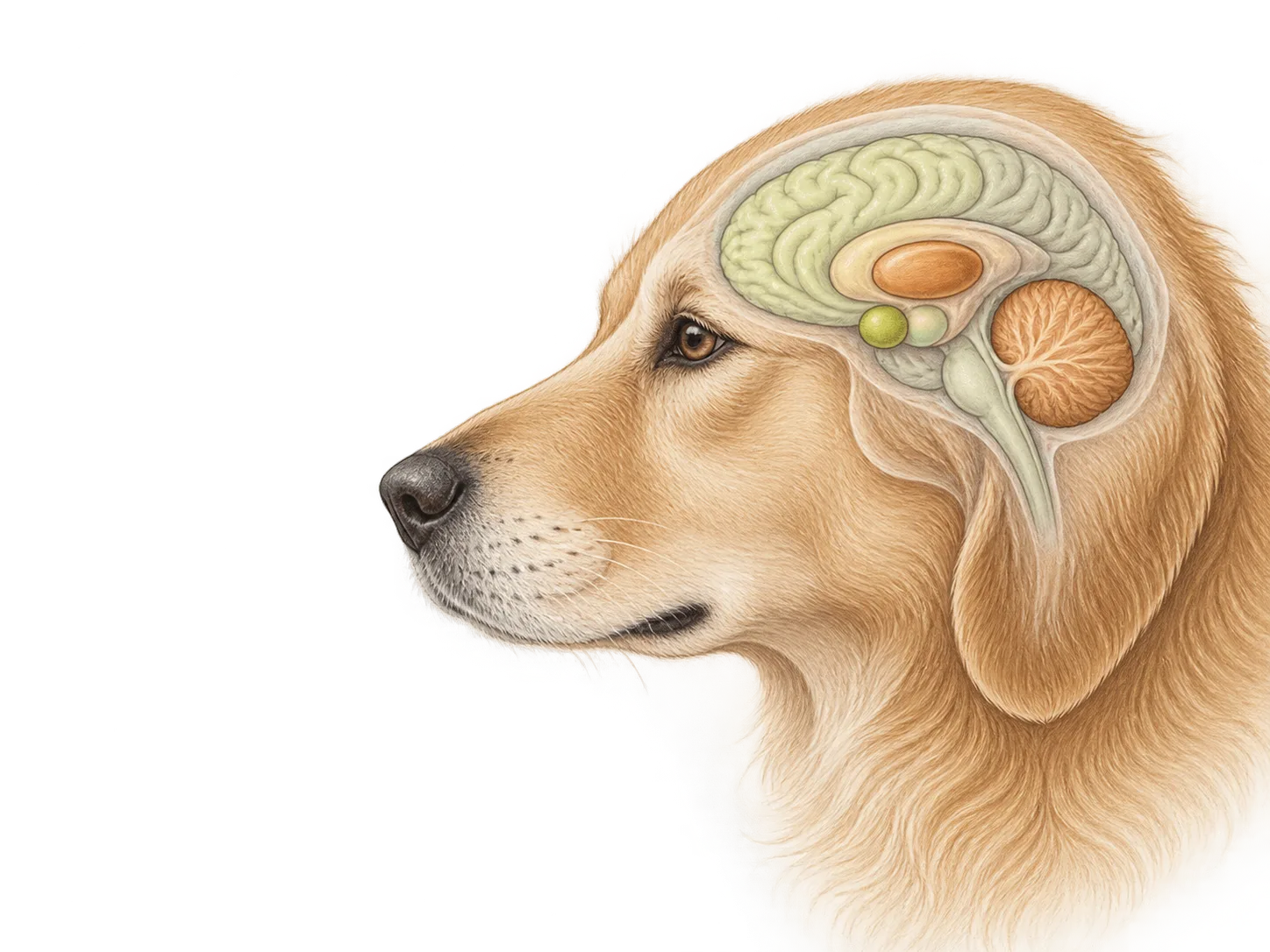
Important areas in the brain
- Brain cortexMemory, thinking and perception
- HypothalamusIncluding appetite and metabolism
- AmygdalaEmotional processing
- Basal gangliaMovement and learning
- CerebellumCoordination and muscle control
- BrainstemVarious vital body functions
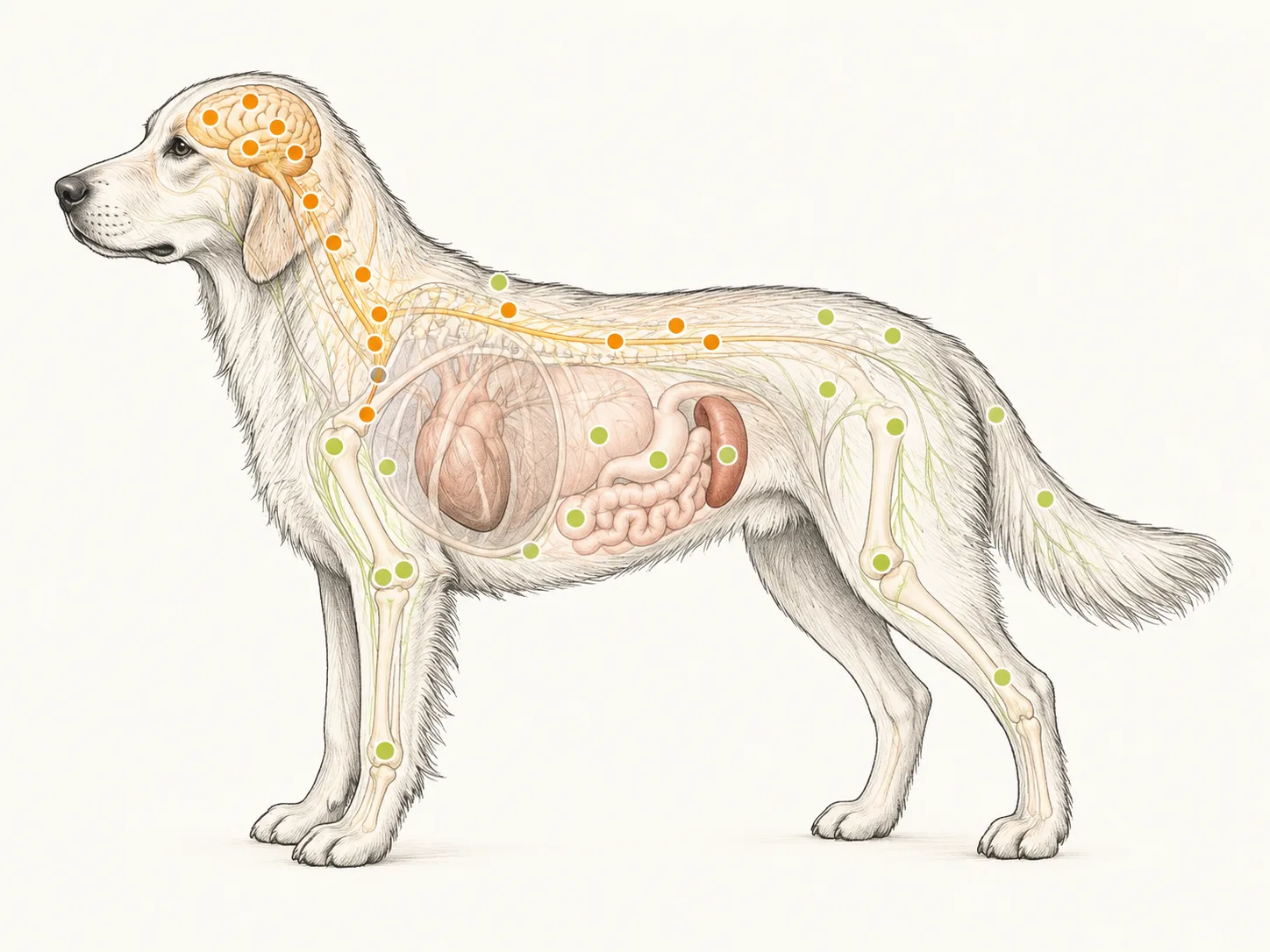
Receptors throughout the body
CB1 is relatively common in the brain and central nervous system.
CB2 is mainly associated with the immune system and peripheral tissues.
The distribution is not absolute: both receptor types can occur in multiple places.
Composition of the oil
What does entourage effect mean?
The entourage effect is the hypothesis that cannabinoids combined with terpenes, flavonoids and other plant compounds may act differently or more strongly than individual substances. A broader plant profile alone does not prove a better clinical outcome.
A combination of compounds can have a different overall profile from isolated CBD. Standard Gold contains full-spectrum hemp extract in hemp seed oil; the special Gold formula for cats contains no terpenes. CBD isolate is highly purified cannabidiol with a narrower profile. The complete formulation determines which other compounds a product contains.
The entourage effect is therefore mainly a concept about cooperation within the formula. It is not the same as the amount of CBD that enters the bloodstream from the intestines.
View the composition of Gold CBD →Science in progress
CBD and interactions: from research to understanding
Positive findings deserve a clear place. Below you can read what was studied, which outcomes were found and what they mean for an informed choice.
DOG · 2018
Positive findings in osteoarthritis
A controlled study found improved pain scores and activity in dogs with osteoarthritis receiving a CBD-rich hemp extract. Sixteen dogs completed the study. This is a positive finding for the tested formulation; larger studies remain important.
Read the study ↗CAT · 2025
Cats are also being studied clinically
A Dutch study published in 2025 found improved pain scores with a CBD/CBDA paste in cats with osteoarthritis. Fourteen of 26 cats completed the study. Most withdrawals were due to refusal of the paste; vomiting was sometimes reported.
Read the study ↗LAB · 2022
Interactions actually measured
A mouse model of inflammatory pain found synergy between CBD and beta-caryophyllene. This specific combination worked more strongly than expected from the individual effects. This is experimental support for interactions, without establishing a benefit for every formulation or species.
Read the study ↗These studies concern the products used in each trial. They are not clinical product tests of our oils. Formulation, amount and species matter. Discuss use alongside illness or medication with your veterinarian; do not change existing treatment yourself.
Research made clear
Three questions, each with its own answer
- 01
Effects
Does a studied outcome, such as pain or activity, change? A comparison with placebo helps answer this question.
- 02
Absorption
How much CBD reaches the blood? Food and the delivery form can play a role. Absorption alone does not establish a clinical effect.
- 03
Interactions
Does a combination offer an additional benefit over the individual substances? Direct comparisons are needed. This is the question behind the entourage effect.
With care for dogs and cats
Science helps us consider each animal group and the complete formulation more carefully. Our cat range uses special Gold without terpenes, in two carrier oil variants.

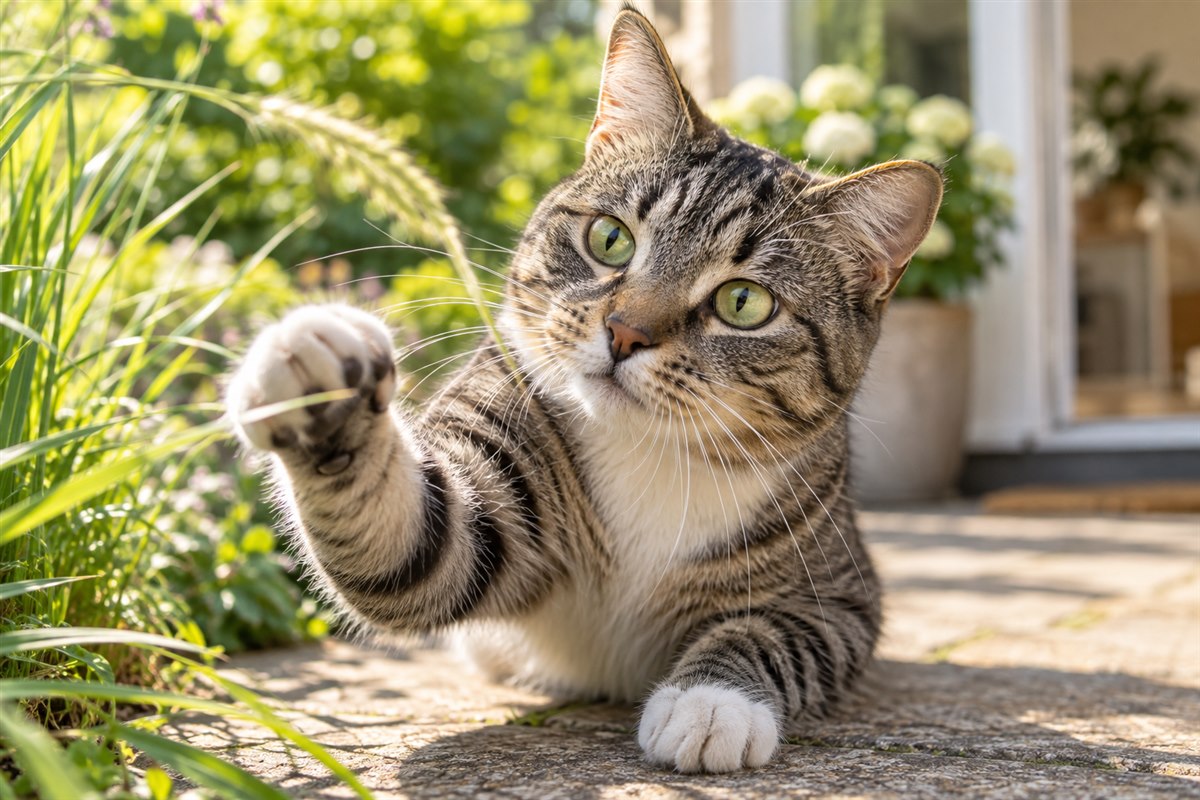
By animal species
What has been studied, and what do we not yet know?
Relatively the most researched
The ECS and CBD have been studied relatively extensively in dogs. A 2019 study found higher CBD blood concentrations in dogs than in cats, but used different formulations. This does not establish a universal ranking of absorption between species or prove a clinical entourage effect.
Less research data
Cats have an ECS, but convincing clinical evidence for an entourage effect is lacking. They metabolise cannabinoids differently from dogs. Some glucuronidation pathways are limited; this does not automatically mean CBD accumulates. Formulation, absorption and elimination require separate investigation.
Not one animal group
Laboratory rodents provide much of our basic knowledge, including experimental synergy for specific combinations. Their receptors, metabolism and experimental conditions cannot simply be extrapolated to pets or humans. Rabbits are not rodents.
ECS present, evidence very limited
Cannabinoid receptors have also been demonstrated in birds. However, the entourage effect has not been convincingly studied in pet birds.
Absorption varies by formulation
In a small crossover study in senior horses, oral CBD bioavailability was approximately 8%. This applies to that formulation and study design, not to all horses or oils. The study measured absorption and disposition, not an entourage effect.
Horse study · 2022 ↗Our conclusion: it is irresponsible to write that the entourage effect has been proven to apply to all animals. We consistently talk about a possible interaction within full-spectrum hemp extract and identify the limitations of the research per animal species.
What about fish, amphibians and invertebrates?
Endocannabinoid signalling has also been studied in fish and amphibians, including in the brain and behavioural regulation. Invertebrates have related signalling pathways, but no uniform mammalian-type ECS. Fruit flies lack the classical vertebrate cannabinoid receptors; other cannabinoid-sensitive receptors have been described in C. elegans. This does not support a general claim about the efficacy or safety of CBD products in these animals.
Bioavailability
Intake is mainly about nutrition and fats
CBD is fat soluble. A small bite of suitable, fat-containing food helps CBD pass through the digestive system and can support bioavailability. This nutritional effect is separate from the entourage effect, but both topics are relevant to the ultimate use of a CBD oil.
Do not transfer efficacy, safety or dosing from one species to another, including by simply adjusting for body weight. Absorption, liver metabolism and nervous system sensitivity differ. Discuss use during illness or medication with a veterinarian familiar with the species.
- Entourage effect: possible cooperation between constituents.
- Bioavailability: which part of the CBD reaches the body.
- Practical advice: preferably serve the oil with a small snack containing fat.
Substantiation
What is this explanation based on?
Comparative veterinary research describes the ECS and cannabinoid receptors in different animal species. Positive experimental findings exist for specific combinations. Reviews also emphasise that results vary and clinical comparisons between complete extracts and individual components remain limited.
- Comparative veterinary review of the ECS and phytocannabinoids
- Scientific review of what the entourage effect is and is not
- Research into CB1 and CB2 receptors in birds
- Dogs and cats: CBD absorption with different formulations (2019)
- Cats and cannabinoids: metabolism and knowledge gaps (2025)
- Oral CBD bioavailability in senior horses (2022)
- Endocannabinoid signalling beyond mammals
- Endocannabinoid-like systems in invertebrates (2021)